



Owning and using an air rifle or air gun is a normal part of rural life across the UK. Many people use an air rifle for pest control, target shooting, or general target practice, and there are countless farms and rural properties where this activity takes place safely every day. However, problems can arise when neighbours hear gunshots, see someone carrying a rifle, or misunderstand the purpose of an air weapon.
Complaints about air guns often come from concern rather than hostility. Many people have little experience with air rifle shooting and may assume that any gun is dangerous. A calm and informed response usually resolves the situation quickly. However, the wrong reaction can escalate a minor concern into a serious dispute.
This guide explains how to respond if a neighbour complains about your air gun activity. It also covers what the UK law actually says about air gun ownership, where it is legally allowed to shoot, and how responsible behaviour protects both shooters and the wider public. If you are unsure how the wider legislation applies to air rifles in the UK, our full guide to Air Rifle Laws (UK): Where You Can Shoot, Carry, and Store explains the legal framework in plain English.
Introduction to Air Rifles
Air rifles are a staple in the UK shooting community, valued for their versatility in target shooting, pest control, and hunting small game. As a type of air gun, they operate by using compressed air or gas to fire pellets, making them distinct from traditional firearms. Air gun ownership comes with responsibilities, and understanding the basics of how air rifles work is essential for anyone interested in this hobby.
UK law draws a clear line between air guns and firearms, primarily based on the rifle’s muzzle energy. Most air rifles used for sporting purposes fall below the legal threshold of 12 ft-lbs of muzzle energy. If an air rifle exceeds this limit, it is classified as a firearm and requires a firearms certificate (FAC) to own and use legally. This distinction is crucial for anyone considering gun ownership, as the licensing process for firearms is much stricter and involves background checks and secure storage requirements.
Why Neighbours Sometimes Complain
Many complaints about air rifles arise from misunderstanding rather than genuine legal problems.
Someone who has never handled an air rifle may assume the rifle is equivalent to a firearm used for hunting large animals. In reality, most air guns are relatively low power sporting tools powered by compressed air, designed for target shooting or small scale pest control.
However, even a modest air rifle can cause serious injury if misused. This is why UK law treats air gun ownership seriously and places responsibility on the person using the gun to ensure that the activity does not endanger others. Misuse of air guns, such as carrying or using them irresponsibly, can be considered a serious criminal offence under the Firearms Act, with severe legal consequences.
A neighbour hearing repeated shots may simply be unsure whether the activity is safe. Responding calmly and explaining the situation often prevents the issue from escalating further.
What the Law Actually Says About Air Rifles
Many people assume that using an air gun is illegal near houses or in gardens. The simple answer is that the legality depends on where and how the air rifle is used, and it is primarily governed by the Firearms Act 1968, which sets out the legal restrictions on air guns and air rifles in the UK.
Additionally, local laws may impose further restrictions or requirements depending on your region, so it is important to check with your local authority before using an air rifle or pellet gun.
When it comes to legal thresholds, air rifles and pellet guns with a muzzle energy above 12 ft-lbs are classified as firearms under the Firearms Act. These more powerful guns require a firearms certificate, and their use is subject to stricter licensing and safety regulations.
Legal Power Limits
Under UK law, most air rifles fall within a specific muzzle energy limit. If the maximum muzzle energy exceeds this limit, the rifle becomes legally classified alongside other firearms and requires a firearms certificate.
Standard sporting air rifles, including many PCP air rifles and spring powered models, remain below this limit and do not require a licence in England. However, a powerful air rifle that exceeds the legal muzzle energy threshold requires a firearms licence and must go through a full licensing process.
Licensing and Certificates
Where a rifle exceeds the permitted level of muzzle energy, the owner must apply for a firearms certificate. The process involves background checks, secure storage requirements, and demonstrating a legitimate reason for owning or carrying the rifle, such as target shooting or pest control.
Different rules apply in Northern Ireland, where an air weapon certificate may be required even for lower-powered air guns.
Northern Ireland Air Rifle Regulations
If you live in Northern Ireland, it’s important to know that air rifle regulations are stricter than in other parts of the UK. The Firearms (Northern Ireland) Order 2004 sets out the rules for owning and using air guns in the region. Unlike in England, Wales, or Scotland, anyone wishing to own an air rifle in Northern Ireland must apply for a firearms certificate, regardless of the rifle’s power.
The application process involves a thorough background check and you must provide a valid reason for wanting to own a rifle, such as target shooting or pest control. The law also sets clear muzzle energy limits: air pistols must not exceed 1 joule (0.74 ft-lbs), while air rifles are capped at a maximum muzzle energy of 12 ft-lbs. Exceeding these limits or failing to obtain the correct certificate can result in serious legal consequences.
Understanding and following these regulations is essential for anyone who owns or plans to purchase an air rifle in Northern Ireland. Staying compliant with the law helps protect your right to enjoy shooting sports and ensures the safe use of guns and firearms in your community.

Live Quarry Shooting Regulations
Shooting live quarry with an air rifle is a popular method of pest control and wildlife management in the UK, but it comes with strict legal and ethical responsibilities. The Wildlife and Countryside Act 1981 and the Animal Welfare Act 2006 set out the rules for using air rifles to control certain species.
Some birds, such as pigeons and crows, can be controlled under general licences, while others may require special permission. For mammals like rabbits and grey squirrels, air rifles can be used for pest control, but shooters must always ensure humane dispatch. This means taking only shots that guarantee a quick, clean kill and avoiding unnecessary suffering.
When It Is Legal to Shoot
Many disputes arise because neighbours assume that shooting near homes is illegal. In reality, UK law allows the use of an air rifle on private premises if it is done safely. However, shooting is only legal on private land or your own premises, and shooting without permission on someone else's property is illegal.
Shooting on Your Own Land
If you own land or have the landowner's permission—a legal requirement for shooting on land you do not own—you may be legally allowed to use an air rifle for activities such as pest control or target shooting.
However, you must ensure the rifle is used safely and that ammunition cannot leave the boundary of the property.
Backstop Requirements
One of the most important safety measures is using an effective backstop. This ensures that pellets stop safely rather than travelling further.
A suitable backstop prevents serious damage and ensures the air gun is used responsibly.
Common Reasons for Complaints
Understanding why complaints happen can help you avoid them.
Noise and Visibility
The sound of a gun being fired can alarm people who are unfamiliar with air rifles. Even quiet pre charged pneumatic models may attract attention if used frequently.
Seeing Someone With a Rifle
A person carrying a rifle in a garden or field may cause concern, especially if neighbours cannot see the target area.
Because many air rifles resemble larger guns, people sometimes assume the situation is dangerous even when the activity is completely lawful.
What To Do If A Neighbour Raises A Concern
When a neighbour approaches you about your air gun, the best response is calm and respectful.
Listen First
Allow the neighbour to explain why they are worried. Their concern may relate to safety, noise, or misunderstanding about gun ownership.
Listening first demonstrates that you take the issue seriously and are willing to cooperate.
Explain What You Are Doing
Explain that you are using an air rifle safely for target practice or pest control, and that the activity is conducted on private premises with appropriate precautions.
A clear explanation often reassures people who are unfamiliar with air gun ownership.
What Not To Say During A Dispute
Certain responses can escalate a minor concern into a conflict.
Avoid Confrontational Statements
Statements such as “I can do what I want on my land” may technically reflect property rights, but they often worsen the situation.
Although UK law may allow you to use an air rifle, showing respect for neighbours is usually the better approach.
Never Dismiss Safety Concerns
Even if you believe the complaint is unnecessary, dismissing concerns about public safety can appear irresponsible.
Instead, explain how you ensure safety when using the rifle.
Demonstrating Responsible Shooting
Showing that you are a responsible shooter can quickly reassure concerned neighbours.
Safe Shooting Setups
Explain that your air rifle is used with a proper target area and an effective backstop. Describe how pellets are contained and how you control the shooting direction.
Responsible shooters also ensure that the maximum range of the pellet is contained within the property.
Proper Equipment Handling
Responsible owners keep their guns, ammunition, and accessories secure when not in use. This demonstrates that gun ownership is treated seriously.
Air Rifle Safety Equipment
Using the right safety equipment is a key part of responsible air gun ownership. Whether you’re new to shooting or an experienced enthusiast, investing in proper safety gear helps prevent accidents and demonstrates your commitment to safe gun ownership.
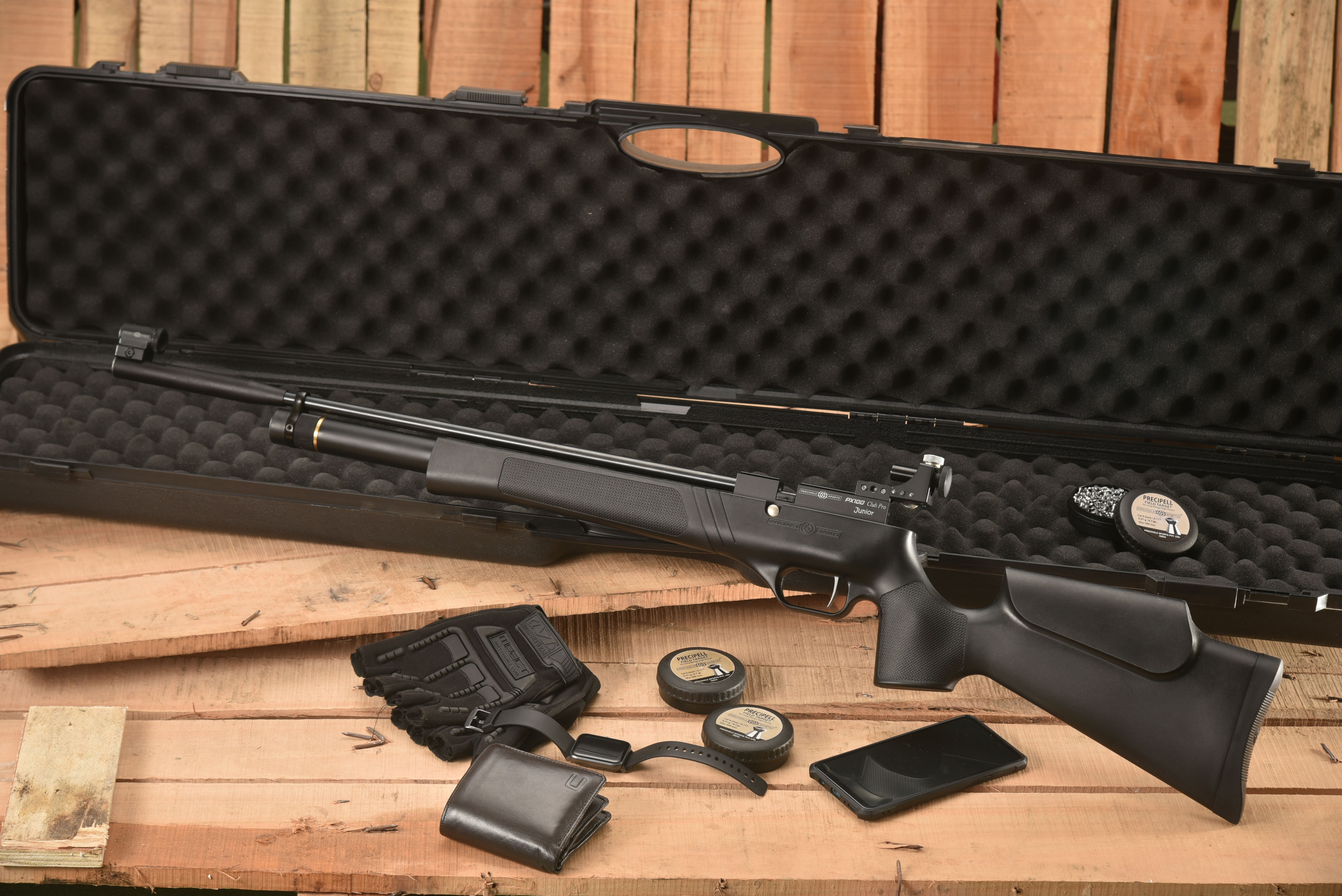
Essential safety equipment for air rifle users includes eye protection, such as shooting glasses, to guard against pellet ricochets or flying debris. Ear protection, like earplugs or earmuffs, is also recommended, especially when shooting in enclosed spaces or with more powerful rifles. A secure gun case or slip is important for safely transporting your rifle and preventing accidental discharge.
It’s also wise to keep a first aid kit on hand and consider a pellet retrieval tool for safe cleanup after shooting sessions. By using the right safety equipment every time you handle your air rifle, you help ensure a safe environment for yourself and those around you.
Responsible Pest Control
In rural areas, many people use an air rifle for pest control.
Species such as grey squirrels or feral pigeons can cause agricultural damage and may be controlled under certain general licences. These licences allow the control of specific pest bird species for reasons including crop protection or public health.
When dealing with live quarry, shooters must ensure a clean kill and avoid unnecessary suffering.
Ethical Shooting Standards
When dealing with live quarry, ethical standards are extremely important.
A shooter must be confident that the air rifle can consistently hit the target area required for a humane outcome. For example, a clean humane dispatch of small animals requires careful shot placement and understanding of the rifle’s muzzle velocity and muzzle energy.
Age Restrictions and Supervision
The legal requirements surrounding air gun ownership also include age restrictions.
Parents or guardians must exercise control over young people's use of air rifles to ensure safety and legal compliance.
Individuals under the age of 18 cannot buy or hire air pistols or ammunition in the UK. The owner of an air gun must be at least 18 years of age. Individuals aged 14-17 can borrow and use air rifles without supervision on private premises with permission, but they cannot buy, hire, or receive air guns or ammunition as gifts. If you are under 14 years old, you can use air rifles only under the supervision of a person aged 21 or over on private premises. It is illegal to sell an air rifle or ammunition to a person under 18 years of age. A parent or guardian over 21 can purchase and look after air guns for someone under 18. A person under 18 cannot have an air rifle in a public place unless supervised by someone aged 21 or over and with a reasonable excuse.
Use of Air Pistols
Air pistols are a compact and versatile type of air gun, commonly used for target shooting and pest control at close range. In the UK, air pistols are subject to strict regulations, with a maximum muzzle energy limit of 6 ft-lbs. This makes them less powerful than most air rifles, but they are still capable tools for both sport and practical use.
Just like air rifles, air pistols are covered by age restrictions and must be handled and stored safely. Only those over a certain age may legally own or use an air pistol, and younger shooters must always be supervised by a responsible adult. Safe handling, secure storage, and respect for the muzzle energy limit are all essential for legal and responsible use.
Transporting an Air Rifle Safely
Another issue that sometimes causes concern is the sight of someone carrying a rifle outside their property. Under UK law, a person may carry an air gun in a public place only if they have a reasonable excuse.
Examples include travelling to a shooting club, visiting land where you have permission to shoot, or transporting the rifle for maintenance.
Avoiding Armed Trespass
- Entering land with a loaded weapon without permission may be treated as armed trespass.
- This means shooters must always ensure they have the landowner's permission when using an air rifle away from their own property.
- Being considered trespassing while carrying guns can lead to serious consequences under firearms legislation.
When Police May Become Involved
If a neighbour contacts the authorities, police may visit to check that the activity is lawful. In most situations, demonstrating that the air rifle is used safely and within the law resolves the situation quickly.
However, unsafe behaviour or failure to follow legal requirements can lead to heavy penalties.
Preventing Complaints in the First Place
The easiest way to avoid disputes is to take preventive steps. Informing neighbours that you occasionally use an air rifle for pest control or target shooting can prevent misunderstandings. Ensuring the shooting area is clearly safe and keeping guns out of sight when not in use can also reduce unnecessary alarms.
Final Thoughts on Handling Complaints
Neighbour concerns about air guns are usually rooted in misunderstanding rather than hostility. Responding calmly and explaining the situation often resolves the issue quickly. Responsible air gun ownership means understanding the law, respecting the concerns of others, and ensuring the air rifle is used safely at all times.