

Air Rifle Scopes: Basics, Reticles and What to Buy First
Choosing the right air rifle scope can feel overwhelming when you’re starting out, especially for UK shooters or those interested in the UK airgun scene. With so many magnifications, reticle types, and features to choose from, it’s easy to overcomplicate what should be a straightforward decision.
The truth is, most shooters don’t need a high-end scope to get accurate, consistent results. Using a good scope can make shooting more fun and boost confidence for beginners. What matters is understanding the basics — how scopes work, what different reticles do, and which features actually make a difference for your type of shooting.
This guide breaks it all down in plain English. Air rifle scopes are commonly called 'airgun scopes' or 'optical sighting devices' by enthusiasts. Whether you’re shooting targets in the garden, heading to the range, getting into pest control, competition, or hunting, you’ll learn exactly what to look for in an air rifle scope — and what to avoid wasting money on.
What an Air Rifle Scope Actually Does
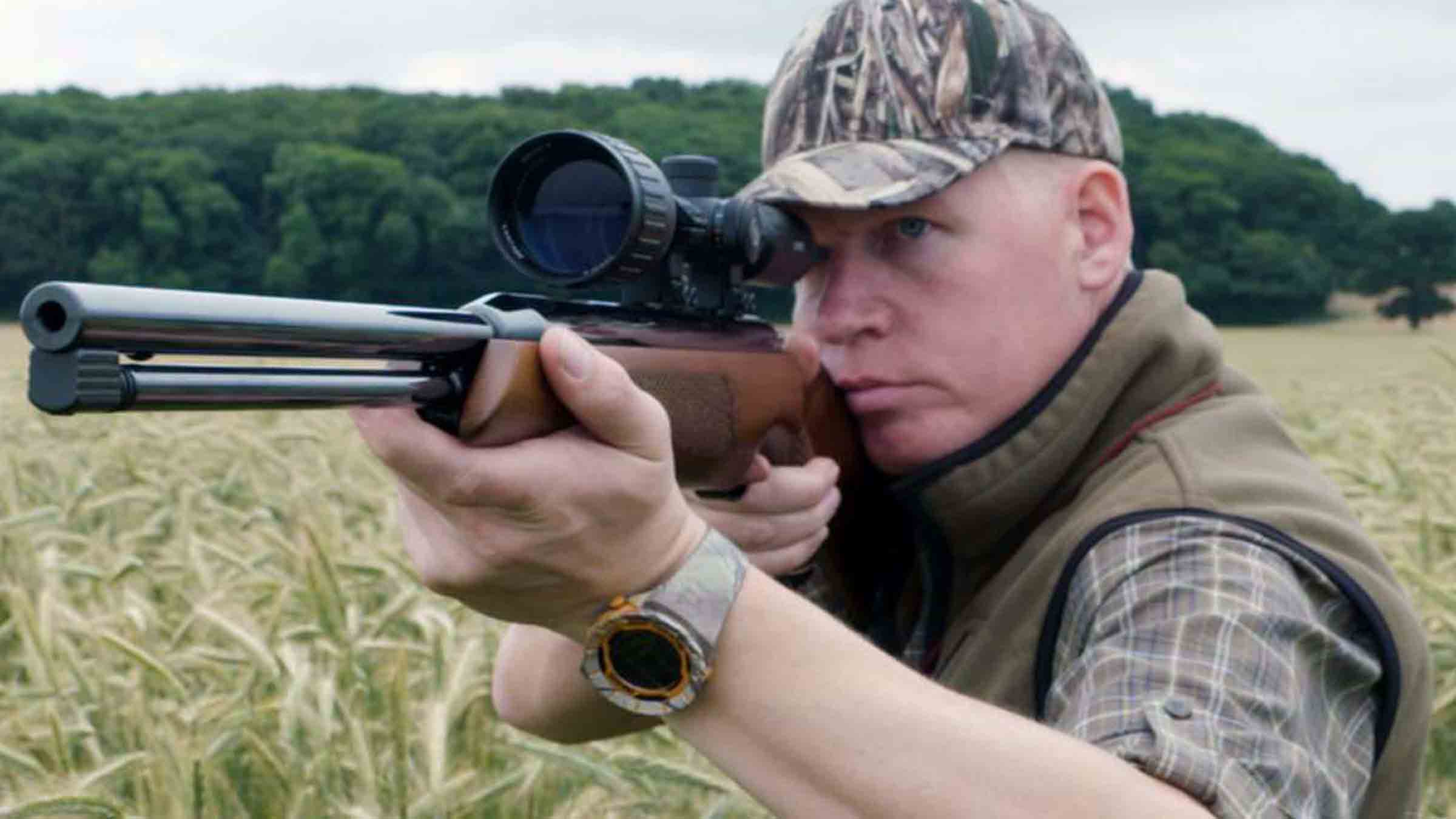
At its simplest, an air rifle scope is an optical sighting device designed for air guns that helps you aim more precisely by magnifying your target and providing a consistent and accurate aiming point through a reticle (crosshair).
But there’s more going on than just zoom.
A scope also:
- Helps you aim at smaller targets with greater precision
- Allows you to compensate for pellet drop over distance
- Improves consistency compared to open sights
- Makes it easier to shoot accurately at longer ranges by providing an accurate aiming point
Unlike firearms, air rifles have a more pronounced pellet arc. This means your scope plays a crucial role not just in aiming, but in helping you understand where your pellet will land at different distances. These principles apply to air guns in general, not just air rifles.
Air Rifle vs Firearm Scopes: What’s the Difference?
Wondering about the differences in firearms and air rifles - Read this
This is one of the most important things beginners miss.
Air rifles — especially spring-piston rifles — produce a unique double recoil. When fired, the rifle moves backwards and then sharply forwards as the spring releases. This forward recoil can damage scopes that aren’t designed to handle it. Air rifle scopes are engineered for reliability under these unique recoil conditions, ensuring consistent performance and durability over time.
Key takeaway:Not all scopes are suitable for air rifles.
When choosing a scope, make sure it is:
- Rated for air rifle use (or specifically “springer rated”)
- Built to withstand forward recoil
- Designed for shorter shooting distances
- Constructed for long-term reliability with proper maintenance
Using a standard firearm scope on a spring-powered air rifle often leads to internal damage and loss of zero. Air rifle scopes use optical principles similar to a refracting telescope, with precise reticle placement and lens alignment to ensure accurate targeting.
Understanding Scope Magnification
Magnification is usually written as something like:
3–9×40
This means:
- 3–9x = adjustable magnification (zoom level)
- 40 = objective lens size in millimetres
Choosing a magnification that is too high for your needs can not only make aiming more difficult but also increase the cost unnecessarily, as you may end up paying more for features you don't use.
What Magnification Do You Actually Need?
For most air rifle shooters:
- 3–9x → Ideal all-rounder
- 2–7x → Great for close-range shooting (garden, pest control)
- 4–12x → Better for longer-range target shooting
Beginners often assume “more zoom = better,” but that’s not always true.
Higher magnification:
- Reduces field of view
- Makes wobble more noticeable
- Can make target acquisition slower
For general use, a 3–9x scope is the safest and most versatile choice.
Objective Lens Size Explained
The second number (e.g. 40 in 3–9×40) refers to the diameter of the objective lens, which is the size of the front lens.
Larger lenses:
- Let in more light
- Provide a brighter image
- Perform better in low-light conditions
However, they also:
- Add weight
- Require higher mounts
- Can make the rifle feel bulkier
Best Range for Air Rifles
- 32–44mm → Ideal balance for most shooters
Anything larger is usually unnecessary unless you’re shooting in very low light regularly.
Reticle Types Explained (And Which to Choose)
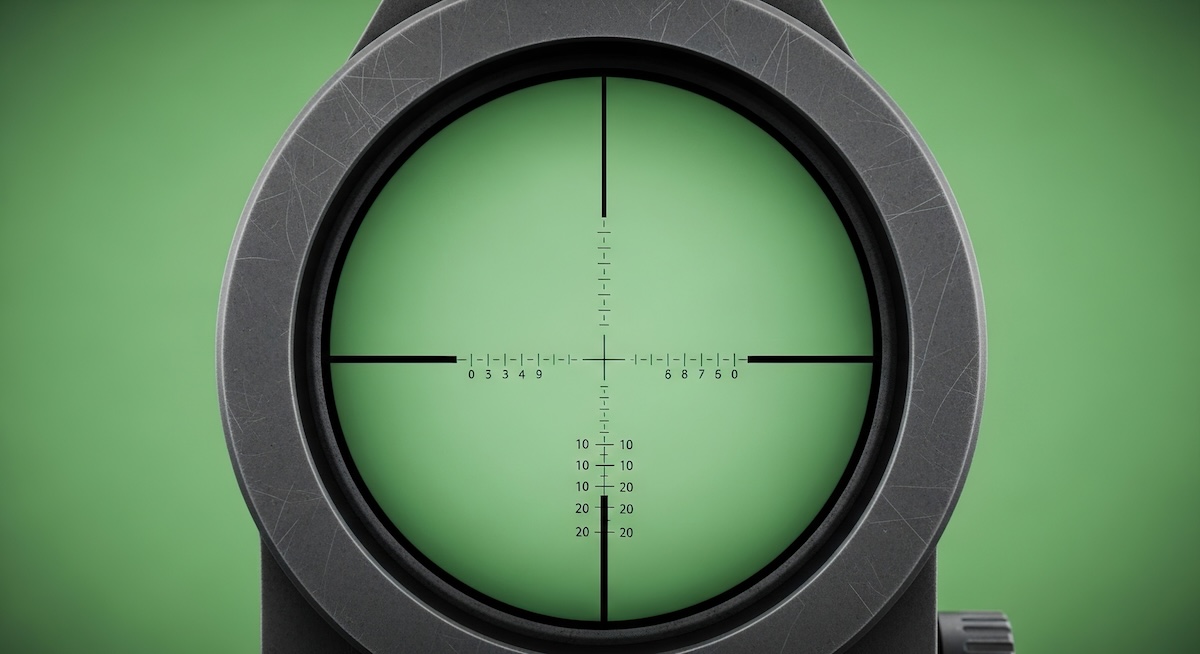
The reticle is the pattern, or form, you see inside the scope — its physical structure determines how you aim and plays a big role in accuracy.
1. Duplex Reticle (Basic Crosshair)
This is the simplest design:
- Thick outer lines
- Thin centre cross
Best for:
- Beginners
- Short-range shooting
- Simple target work
Limitation:
No reference points for holdover, making longer shots harder.
2. Mil-Dot Reticle
A mil-dot reticle has evenly spaced dots along the crosshair.
These dots act as reference points, allowing you to:
- Compensate for pellet drop
- Adjust for different distances
- Improve consistency without adjusting turrets
Best for:
- General air rifle use
- Pest control
- Learning holdover
This is the most recommended reticle for beginners who want to improve.
3. Half Mil / MOA Reticles
More advanced versions of mil-dot reticles include:
- Half-mil spacing
- MOA-based markings
- More detailed aiming references
Best for:
- Precision shooting
- Longer distances
- Shooters who understand holdover
For beginners, these can feel cluttered — but they’re excellent once you gain experience.
Fixed vs Variable Magnification
Fixed Magnification
- Single zoom level (e.g. 4x)
- Simpler and often more durable
- Usually cheaper
Variable Magnification
- Adjustable zoom (e.g. 3–9x)
- More versatile
- Better for mixed shooting distances
For most people, variable magnification is the better choice, especially if you’re still figuring out your preferred shooting style.
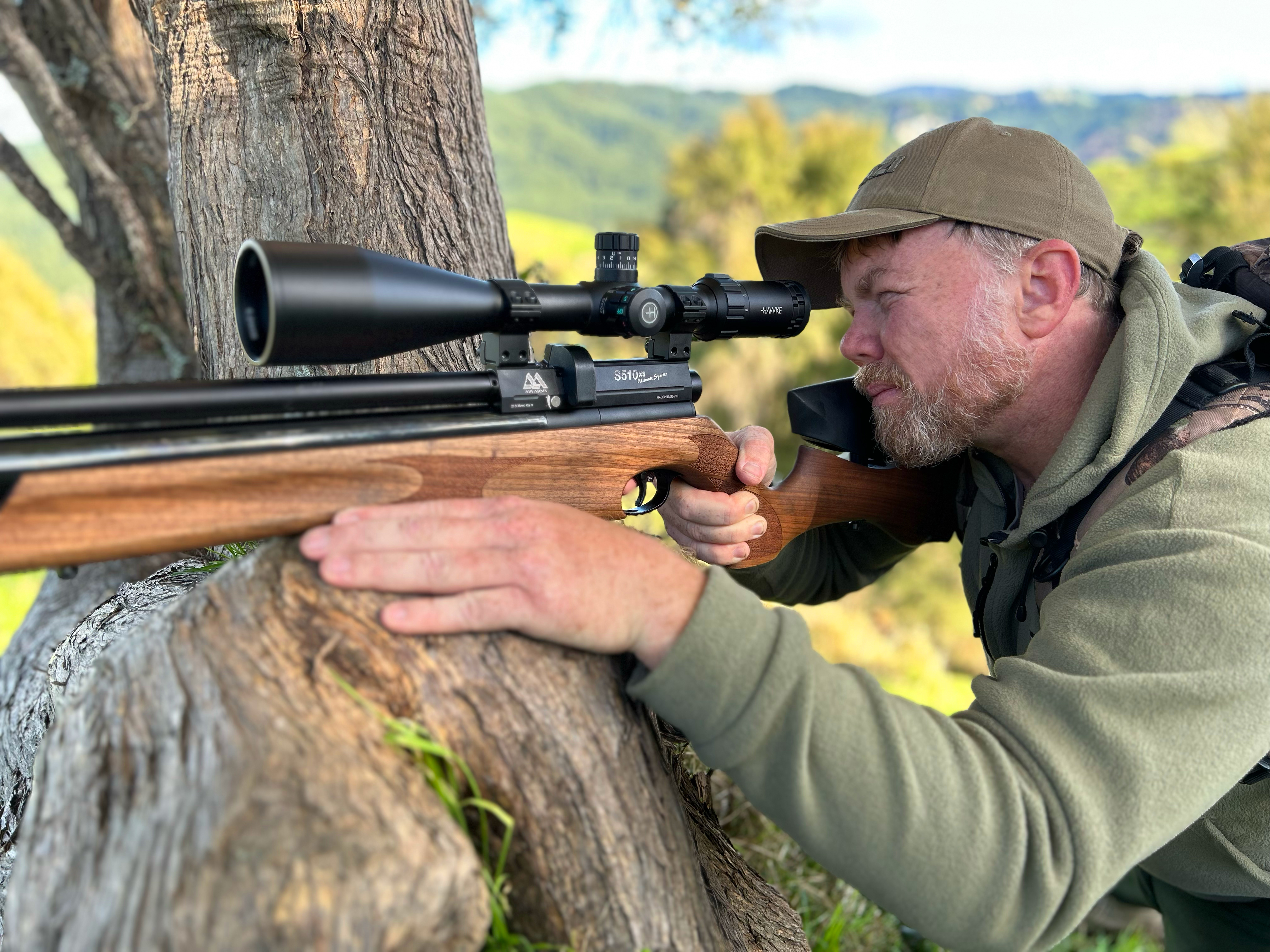
Parallax and Adjustable Objective (AO)
Parallax is one of the most misunderstood scope features — but it matters a lot for air rifles because parallax error can significantly impact your accuracy if not properly addressed.
Adjustable Objective (AO) scopes are designed to let you match the reticle focus to the exact distance of your target, which reduces parallax error and improves precision, especially at close range.
When you adjust for parallax correctly, the reticle will remain fixed on the target even if your head or viewpoint shifts, ensuring stable and accurate shooting.
What Is Parallax?
It’s an aiming error that occurs when the reticle and target are not on the same focal plane.
At typical air rifle distances (10–40 yards), parallax error can significantly affect accuracy.
What Is AO (Adjustable Objective)?
An AO scope lets you:
- Focus the image at different distances
- Eliminate parallax error
- Sharpen your sight picture
You’ll usually see markings like:
- 10 yards
- 20 yards
- 30 yards
Do You Need AO?
Yes, for most air rifle use.
A scope without AO (or side focus) is usually set for 100 yards — far beyond typical airgun distances — which can lead to blurry images and aiming errors.
Turrets: Windage and Elevation
Scopes have two main adjustment turrets:
- Elevation (top) → up/down
- Windage (side) → left/right
These allow you to:
- Zero your rifle (Check out our guide on zeroing your rifle)
- Adjust your point of impact
Most airgun scopes adjust in:
- 1/4 MOA per click
Once zeroed, many shooters prefer to use reticle holdover instead of constantly adjusting turrets.
Build Quality and Durability
Not all scopes are built the same — and cheap optics can cause more frustration than they’re worth. When choosing air rifle scopes, always check for robust construction and ensure compatibility with your rifle's stock for a secure fit.
- Solid mount compatibility: Make sure your scope can be properly mounted on your rifle’s rails or top rails for optimal stability and alignment.
- What to look for: Durable materials, weather resistance, and a design that fits securely on top rails as a preferred mounting platform.
What to Look For
- Air rifle / springer rated
- Solid mount compatibility
- Clear glass (not cloudy or distorted)
- Reliable turret tracking
What to Avoid
- Ultra-cheap, unbranded scopes
- Scopes with inconsistent adjustments
- Anything not rated for recoil
A slightly higher upfront investment usually saves money in the long run.
What to Buy First (Beginner Recommendations)
If you’re starting from scratch, keep it simple. Begin with a good scope, as quality optics are essential for precise targeting whether you’re hunting, target shooting, or just plinking. Many popular guns and the most popular guns come equipped with top rails, making it easy to mount a variety of air rifle scopes and sights. Some scopes now offer combined features, such as night vision or thermal imaging, which can be beneficial for advanced shooting needs. Also, consider the importance of after-sales services when choosing a scope, as good customer support and informational services can make a big difference in your overall experience.
How Much Should You Spend?
You don’t need to spend hundreds to get a good air rifle scope.
Typical Budget Ranges
- £30–£60 → Basic beginner scopes
- £60–£120 → Best value range (recommended)
- £120+ → Premium features and glass
For most shooters, the £60–£100 range hits the sweet spot of quality and affordability.
Common Mistakes to Avoid
1. Buying Too Much Scope
High magnification and complex reticles aren’t always helpful. Start simple.
2. Ignoring Parallax
A non-AO scope can seriously limit your accuracy at typical airgun distances.
3. Mixing Cheap Mounts with Good Scopes
Your scope is only as stable as your mounts. Don’t overlook them.
4. Not Matching Your Shooting Style
Garden plinking, target shooting, and pest control all have slightly different needs.
Final Thoughts
An air rifle scope doesn’t need to be complicated to be effective. Choosing the right scope can significantly enhance your overall shooting experience by improving accuracy, confidence, and enjoyment during every session.
If you focus on the fundamentals — sensible magnification, a usable reticle, and proper parallax adjustment — you’ll end up with a setup that works reliably and helps you shoot more accurately.
For most beginners, a simple 3–9×40 AO scope with a mil-dot reticle is all you need to get started. It’s versatile, affordable, and capable of handling almost any air rifle shooting scenario.
As your skills develop, you can always upgrade — but starting with the right basics will make far more difference than chasing high-end features too early.
We've put together a full guide on Air Rifle accessories - what you need and what you don't